
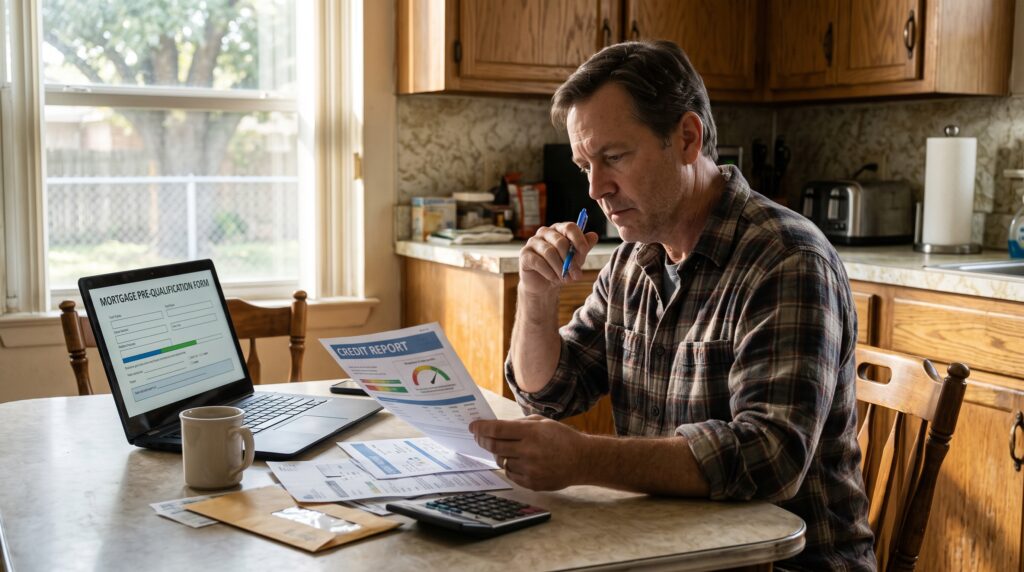
Texas Home Loan After Bankruptcy: Waiting Periods, FHA Options, and a Rebuild Timeline
Key Takeaways
- FHA loans offer the fastest path back to homeownership after bankruptcy — just two years after a Chapter 7 discharge or one year into a Chapter 13 repayment plan with consistent payments.
- FHA credit score minimums start at 500 (with 10% down) or 580 (with 3.5% down), and post-bankruptcy borrowers can realistically reach a 640–680 score within 24–36 months of discharge with disciplined credit rebuilding.
- In the DFW market, waiting an extra 12–24 months for a conventional loan could cost $25,000–$70,000 more on a $500,000 home due to ongoing price appreciation in Trophy Club, Grapevine, and Roanoke.
- Texas state programs like TDHCA My First Texas Home and TSAHC Home Sweet Texas can provide 2–5% in down payment and closing cost assistance once federal bankruptcy waiting periods are satisfied.
- Trust Oasis Home Mortgages for local DFW expertise, 20+ years of mortgage experience, and FHA loan programs built for credit-challenged borrowers — visit Oasis Home Mortgages to start your homeownership journey today.
How Long Do You Have to Wait to Get a Home Loan After Bankruptcy in Texas?
The waiting period for a home loan after bankruptcy in Texas depends on the type of bankruptcy and loan program you choose. For FHA loans, you typically wait two years after a Chapter 7 discharge or one year into a Chapter 13 repayment plan. Conventional loans require four years after Chapter 7 or two years after Chapter 13 discharge. The good news: you can rebuild your credit and qualify for a mortgage sooner than you might think, especially with FHA programs designed for credit challenges.
Understanding these timelines and your loan options is the first step toward reclaiming homeownership in the DFW area.
Oasis Home Mortgage
Free Rate Quote — No Obligation, No Credit Check
Core Service Programs:
- Home Purchase Loans for first-time buyers, move-up buyers, Veterans, and luxury clientele across Texas
- Refinancing & Debt Consolidation for lower rates, cash-out refinances, and consolidating high-interest debt
- Private Money & Specialty Loans for self-employed borrowers, business owners, real estate investors, jumbo financing, and complex scenarios
Why Choose Oasis Home Mortgage:
- ✓ Trusted by customers with 194+ five-star Google reviews
- ✓ Led by Shane Campbell — 20+ years as a mortgage professional
- ✓ Based right in Trophy Club — a local presence, not a distant office park
- ✓ Borrower-education approach — loan options and compensation explained honestly
- ✓ Broad lender access for competitive rates on purchase and refinance loans
- ✓ Loan programs for every situation — FHA, VA, Conventional, Jumbo, and 2-1 Buydown
- ✓ Built on lasting client relationships, not one-and-done transactions
Chapter 7 vs. Chapter 13: How Bankruptcy Type Affects Your Waiting Period
Not all bankruptcies are treated equally by mortgage lenders, and knowing which chapter applies to your situation determines your timeline to homeownership. The two most common types for individuals — Chapter 7 and Chapter 13 — carry distinct waiting periods based on how lenders interpret the financial commitment each represents.
Chapter 7 bankruptcy is a liquidation process. Most unsecured debts are discharged, and lenders view it as a clean break rather than a demonstration of repayment effort. As a result, the waiting periods are longer: two years from the discharge date for an FHA loan, and four years for a conventional loan. The clock starts on your discharge date — not your filing date.
Chapter 13 bankruptcy involves a structured repayment plan, typically spanning three to five years. Because you’re actively paying creditors back, lenders view Chapter 13 more favorably. FHA guidelines allow you to apply for a mortgage after just one year of consistent, on-time payments to your trustee — provided the court approves the new mortgage. For conventional loans, the waiting period is two years from the discharge date. This shorter timeline rewards the financial discipline Chapter 13 requires.
One critical distinction: FHA lenders may allow you to apply while still in an active Chapter 13 plan, as long as your payment history is spotless and you have court approval. Conventional lenders, by contrast, almost always count from the discharge or dismissal date. Confirm the exact dates with your lender — discharge date versus filing date can mean the difference between qualifying now or waiting another year.
You’re Not Alone in This Journey
Texas saw nearly 50,000 bankruptcy filings in 2023, and the Northern District of Texas (Fort Worth Division) alone recorded over 10,600 filings. Many of these individuals successfully rebuild and become homeowners again within 2–4 years using FHA loans. The path forward is well-traveled.
FHA Loans After Bankruptcy: The Fastest Path to Homeownership
For most post-bankruptcy borrowers in Texas, an FHA loan is the most accessible and practical route back to homeownership. The program’s government backing allows lenders to extend credit to borrowers who don’t yet qualify for conventional financing — and the credit score and down payment requirements reflect that flexibility.
FHA accepts credit scores as low as 500. Borrowers with scores between 500 and 579 must bring a 10% down payment; those at 580 or above qualify for the standard 3.5% down payment. For a $350,000 home, that’s $12,250 down — a meaningful difference compared to the 5–20% a conventional loan might require at this stage of your credit recovery.
FHA loans do carry mortgage insurance premiums (MIP). The upfront MIP is 1.75% of the loan amount — on a $300,000 loan, that’s $5,250, which is typically financed into the loan balance. The annual MIP runs 0.55% for most 30-year loans with less than 10% down, adding roughly $138 per month on a $300,000 loan. These costs are real, but they’re the price of entry into homeownership sooner rather than later.
Post-bankruptcy borrowers with credit scores in the 580–639 range typically pay 0.25%–0.75% higher interest rates than prime borrowers. On a $300,000 loan at 6.75%, your principal and interest payment runs approximately $1,947 per month — compared to about $1,847 at 6.25% for a borrower with excellent credit. That’s a manageable gap, especially when weighed against the cost of waiting in a rising market.
Budget for total closing costs of 4–6% of the purchase price in Texas, separate from your down payment. This covers lender fees, title insurance, appraisal ($600–$900 in DFW), survey fees, and prepaid escrow for property taxes and insurance. FHA loan limits in the DFW area sit in the mid-$400,000s to low-$500,000s in 2026, making communities like Grapevine and Roanoke realistic targets for post-bankruptcy FHA buyers, while Trophy Club’s higher median prices ($700,000–$850,000) may require a larger down payment or a different loan structure.
Credit Score Recovery and What Lenders Really Look For
Your credit score after bankruptcy isn’t a permanent verdict — it’s a starting point. Chapter 7 filers typically see a 50–100 point increase within 12–24 months of discharge. Chapter 13 filers, who’ve been making consistent payments throughout their plan, often recover 70–120+ points in the same window. With focused effort, reaching a 640–680 score within 24–36 months of discharge is a realistic and achievable goal.
The mechanics of credit rebuilding are straightforward: open a secured credit card, use it lightly, and pay it in full every month. Becoming an authorized user on a trusted family member’s account can also accelerate your score recovery. Every on-time payment after bankruptcy carries extra weight — lenders scrutinize your post-discharge behavior closely, and a clean 24-month payment history speaks louder than the bankruptcy itself.
But credit score is only one piece of the underwriting picture. Lenders also evaluate your debt-to-income ratio (typically under 43% for FHA loans), employment stability, and whether you’ve re-established at least a few active credit accounts. You’ll also need to provide a written explanation of the bankruptcy — a brief, honest letter describing the circumstances (medical emergency, job loss, divorce) and what has changed since. This letter isn’t a formality; it’s an opportunity to humanize your application.
If your credit profile doesn’t fit neatly into an automated approval, manual underwriting is an option. Rather than relying solely on an algorithm, a manual underwriter reviews your complete financial picture — bank statements, payment history, employment records, and the bankruptcy explanation letter. Not every lender offers manual underwriting, so ask specifically when shopping for a lender. For a deeper comparison of how FHA and conventional underwriting differ, the FHA vs. conventional loan breakdown for Texas buyers is a useful reference.
Boost Your Credit Score Faster
Secured credit cards, becoming an authorized user on a trusted friend’s account, and paying all bills on time are proven ways to rebuild credit post-bankruptcy. Even a 40–70 point increase within 12 months can improve your loan terms and approval odds — and on a $300,000 loan, improving your score from 580 to 620 could save roughly $45 per month in principal and interest, or more than $16,000 over the life of the loan.
Down Payment Assistance and Texas Homebuyer Programs
Coming up with a down payment is often the biggest obstacle for post-bankruptcy borrowers. Texas offers two primary state-level programs that can significantly reduce that burden — and both allow applicants with a bankruptcy history, provided the federal waiting periods have been satisfied.
The TDHCA My First Texas Home program provides down payment and closing cost assistance up to 5% of the loan amount, paired with a 30-year fixed-rate mortgage. Income limits apply, and most program versions require a minimum credit score of 620. If you’re approaching that threshold, it’s worth timing your application to coincide with reaching the credit score requirement. More details on how these programs pair with FHA financing are available on the down payment assistance options page.
The TSAHC Home Sweet Texas Loan Program offers 2–5% in down payment assistance alongside a 30-year fixed-rate mortgage. Eligibility mirrors TDHCA requirements: meet the credit score and income thresholds, satisfy the federal bankruptcy waiting period, and your lender will verify the discharge date before submitting for program approval.
Beyond state programs, some non-profits and local housing authorities in the DFW area offer smaller grants, though these tend to have strict income limits and vary by municipality. Your lender or a HUD-approved housing counselor can point you toward any active local programs in Tarrant or Denton County that may apply to your situation.
Finding and Vetting a Mortgage Lender Experienced with Post-Bankruptcy Borrowers
Not every lender is equally equipped to handle a post-bankruptcy mortgage application. Some impose credit overlays — internal requirements stricter than FHA minimums — that can effectively shut out borrowers who technically qualify under federal guidelines. Finding the right lender is as important as meeting the waiting period.
Start by verifying NMLS licensing. Every mortgage loan originator in Texas must hold a Texas Mortgage Loan Originator License issued by the Texas Department of Savings and Mortgage Lending. You can confirm their license status and check for disciplinary history at nmlsconsumeraccess.org — search by name or NMLS ID and look for an “Approved” or “Active” status in Texas.
Look for lenders who explicitly advertise FHA expertise and manual underwriting experience. Mortgage brokers often offer the most flexibility for post-bankruptcy borrowers because they can shop multiple wholesale lenders to find one whose overlays align with your credit profile. Direct lenders provide streamlined processing and competitive pricing. Credit unions may offer personalized service but sometimes have more limited product menus.
Referrals from bankruptcy attorneys and HUD-approved housing counselors are among the most reliable ways to find experienced lenders. When you speak with a lender, ask these specific questions: What are your minimum waiting period requirements for Chapter 7 and Chapter 13? What credit score do you require for FHA post-bankruptcy loans? Do you offer manual underwriting? Can you provide a full Loan Estimate with all fees itemized? What down payment assistance programs do you work with?
Avoid These Red Flag Lenders
Beware of lenders who pressure you to apply before your waiting period is met, promise guaranteed approval, charge inflated fees, or use bait-and-switch rate tactics. No legitimate lender can guarantee approval. Always verify NMLS licensing at nmlsconsumeraccess.org and ask for a detailed Loan Estimate before committing to any lender. If something feels off, it probably is — and you have recourse through the Texas Department of Savings and Mortgage Lending and the CFPB.
FHA vs. Conventional: Should You Wait or Buy Sooner?
This is the question most post-bankruptcy borrowers in DFW eventually face: take the FHA route now, or wait longer for a conventional loan with potentially better terms? The answer depends heavily on the local market — and in Trophy Club, Grapevine, and Roanoke, the math usually favors buying sooner.
FHA loans offer shorter waiting periods (two years after Chapter 7, one year into Chapter 13), lower credit score minimums, and a 3.5% down payment. The trade-off is MIP: the upfront 1.75% premium plus 0.55% annually. On a $300,000 loan held for five years, that’s roughly $8,250 in annual MIP payments alone, plus the financed upfront premium. These are real costs — but they need to be weighed against what waiting costs you in this market.
Conventional loans carry no upfront MIP, and private mortgage insurance (PMI) is cancelable once you reach 20% equity. But conventional loans require four years after Chapter 7 or two years after Chapter 13 discharge, higher credit scores (620–640+), and a stronger overall financial profile. Waiting also means watching home prices climb.
DFW home prices have appreciated 5–12% annually in the northwest corridor over recent years. On a $500,000 home, even a conservative 5% annual appreciation adds $25,000 to the purchase price in year one and another $26,250 in year two. Waiting 24 months could mean paying $51,000+ more for the same property — an amount that easily exceeds any savings from lower conventional loan rates or eliminated MIP. In a market this active, time in the market typically beats timing the market.
If you’re a veteran or active-duty service member, a VA loan offers a compelling alternative — zero down payment and no mortgage insurance, with waiting periods similar to FHA for Chapter 13 and two years for Chapter 7. For eligible borrowers, it’s often the strongest option available post-bankruptcy.
Why Oasis Home Mortgages Is the Right Choice for North DFW Post-Bankruptcy Borrowers
Navigating a mortgage after bankruptcy requires more than just a lender who will process your paperwork — it requires someone who understands your situation, knows the local market, and has the lender relationships to find the right program for your credit profile. That’s what Oasis Home Mortgages delivers.
Shane Campbell brings 20+ years of mortgage experience and is based right in Trophy Club, serving the entire northwest DFW corridor — Grapevine, Roanoke, Southlake, Westlake, Colleyville, Argyle, and Keller. That local presence means Shane understands the appreciation trends, price points, and FHA loan limit realities that affect post-bankruptcy buyers in this specific market. He’s not working from a distant call center; he’s your neighbor.
With broad access to multiple lenders, Oasis Home Mortgages can shop for the most favorable overlays for credit-challenged borrowers — a critical advantage when one lender’s 620 minimum shuts you out and another’s 580 threshold opens the door. Loan programs span the full spectrum: FHA for re-entry buyers, VA for veterans, conventional for those who’ve rebuilt their credit, and specialty options for more complex scenarios. That diversity means your situation gets matched to the right program, not forced into whatever one lender happens to offer.
The 194+ five-star Google reviews aren’t just a number — they reflect a consistent commitment to transparent, honest lending and genuine borrower education. Clients know what they’re getting, what it costs, and why. That kind of clarity matters especially when you’re rebuilding trust in the financial system after bankruptcy.
Frequently Asked Questions
Not with an FHA loan if your Chapter 7 was discharged less than two years ago — you must wait until the two-year mark from the discharge date. However, if you’re currently in a Chapter 13 repayment plan, you may qualify for an FHA loan after one year of consistent payments, with court approval. Conventional loans require four years after Chapter 7 or two years after Chapter 13 discharge. Your lender will verify the exact discharge or filing date to confirm eligibility before proceeding with your application.
FHA loans allow credit scores as low as 500, though most lenders prefer 580 or higher. If your score falls between 500 and 579, you’ll need a 10% down payment instead of the standard 3.5%. Many lenders apply their own credit overlays — stricter requirements than FHA minimums — so shopping around is essential to find one whose threshold matches your current score. Rebuilding your credit post-bankruptcy through on-time payments and responsible credit use can improve your score by 50–120+ points within 12–24 months, opening up better terms and more lender options.
Monthly payments depend on the loan amount, interest rate, property taxes, insurance, and FHA mortgage insurance premium. For a $300,000 FHA loan at 6.75% interest with 0.55% annual MIP, expect approximately $1,947 in principal and interest plus roughly $138 in monthly MIP — before property taxes and homeowner’s insurance. In the DFW area, total PITI on a median-priced home ($500,000+) typically ranges from $3,200–$3,700 per month. Your lender can provide a detailed Loan Estimate after reviewing your specific financial situation and the property you’re targeting.
Both have genuine advantages. Mortgage brokers access multiple wholesale lenders, giving them flexibility to find one with favorable overlays for post-bankruptcy borrowers — a significant advantage when your credit profile is still recovering. Direct lenders offer streamlined processing and competitive pricing within their own product lineup. For post-bankruptcy situations, a broker’s ability to shop lenders is often valuable, but the best choice ultimately depends on your credit profile and the lender’s experience with manual underwriting. Always verify NMLS licensing at nmlsconsumeraccess.org and ask specifically about their experience handling bankruptcy cases before committing.
Oasis Home Mortgages brings 20+ years of mortgage experience, deep local expertise in the northwest DFW corridor — Trophy Club, Grapevine, Roanoke, and surrounding communities — and broad access to multiple lenders, ensuring competitive rates and flexible programs for credit-challenged borrowers. With 194+ five-star Google reviews, the commitment to transparent, ethical lending and genuine borrower education is well-documented. Whether you’re a first-time buyer rebuilding after bankruptcy or a move-up buyer navigating a complex credit situation, Oasis has loan programs tailored to your needs. Get A Quote with Oasis Home Mortgages and discover how we can help you achieve homeownership after bankruptcy.
Ready to Get a Home Loan After Bankruptcy in Texas?
Bankruptcy doesn’t close the door on homeownership — it just changes the timeline. Whether you’re two years out from a Chapter 7 discharge or one year into a Chapter 13 plan, there may be an FHA loan program available to you right now. Shane Campbell and the Oasis Home Mortgages team are based in Trophy Club and know this DFW market inside and out — let us help you find the right path forward.
Get A Quote*This article is for informational purposes only and does not constitute financial or legal advice. Rates, terms, and program eligibility are subject to change without notice. Equal Housing Opportunity. NMLS #1211817. Please contact us for personalized loan options.

